What is Cushing's Syndrome?
Harvey Cushing was the first to describe in 1932, Cushing's Disease, a disease presenting with hypersecretion of cortisol, that will later be grouped with other pathologies with different aetiologies but with same presentation, under what today we call Cushing's syndrome¹.
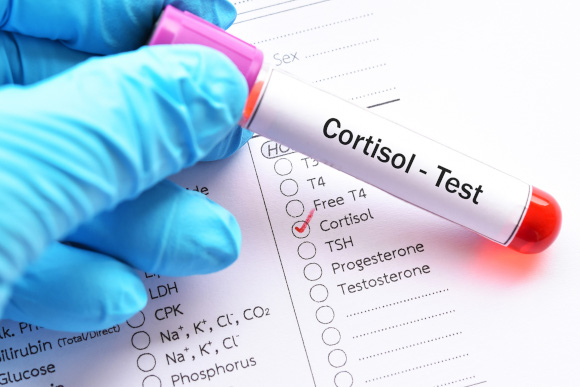
Cushing's Syndrome is a condition that occurs when the body produces an excess of cortisol over a long period of time².
Cortisol is produced by the adrenal glands, two small glands on top of the kidneys. The pituitary gland in the brain sends signals to the adrenal glands to produce cortisol³.
Cortisol is sometimes called "the stress hormone" because it helps the body responds to stress. It also helps to maintain blood pressure, regulate blood glucose (blood sugar), reduce inflammation, and turn the food into energy. Nevertheless, an excess of cortisol can cause harmful effects3³
Endogenous Cushing1s syndrome can be caused by the overproduction of cortisol due to tumours in the pituitary (What was first described by Harvey Cushing¹) and adrenal glands². However exogenous Cushing's syndrome can result from high dose steroid intakes for a long period of time².
What are the symptoms of Cushing's syndrome?
CS is clinically unmistakable when it is fully developed, but the spectrum of clinical presentation is wide with insidious onset therefore the diagnosis can be challenging in mild cases4.
The most common clinical signs of CS are:2,4
· weight gain
· thin arms and legs
· a round face
· increased fat around the base of the neck
· a fatty hump between the shoulders
· easy bruising
· wide purple stretch marks, mainly on the abdomen, breasts, hips, and under the arms
· weak muscles
Children with Cushing's syndrome tend to have obesity and grow more slowly than other children2,4. Women may have excess hair on their face, neck, chest, abdomen, and thighs. Menstrual periods may become irregular or stop5. Men may have decreased fertility with lowered interest in sex and may have erectile dysfunction6,7.
How common is cushing's syndrome?
Cushing's syndrome caused by tumours in the pituitary or adrenal glands is rare8.
Each year, there are only 0.7–2.4 new cases per million. It usually occurs in people over the age of 40 years, and it affects four times as many women than men7.
Want more information about Cushing's syndrome?
Hear the experiences of three patients with Cushing's syndrome: Watch Sammy, Ida or Lily's story here.
The Pituitary Network Association (www.cushings.org) have created a site full of useful information on Cushing's syndrome.
Additional information on Cushing's syndrome could be found on www.cushingshub.com. This website is dedicated for healthcare professionals.
References
- 1. Harvey Cushing: Cushing's Disease, Harold Ellis, Volume 22, Issue 9
- 2. https://www.mayoclinic.org/diseases-conditions/cushing-syndrome/symptoms-causes/syc-20351310 (last access on 24/10/2023)
- 3. https://my.clevelandclinic.org/health/articles/22187-cortisol (last access on 24/10/2023)
- 4. Lynette K. Nieman and others: The Diagnosis of Cushing's Syndrome: An Endocrine Society Clinical Practice Guideline, 2008 May; 93(5): 1526–1540.
- 5. https://medlineplus.gov/genetics/condition/cushing-disease/#resources (last access on 24/10/2023)
- 6. Elena Valassi and others, on behalf of The ERCUSYN Study Group, The European Registry on Cushing's syndrome: 2-year experience. Baseline demographic and clinical characteristics, European Journal of Endocrinology, Volume 165, Issue 3, Sep 2011, Pages 383–392.
- 7. Pivonello R et al. Complications of CS state of the art Lancet Diabetes Endocrinol. 2016; 4 611–29
- 8. Fleseriu M, Auchus R, Bancos I, et al. Consensus on diagnosis and management of Cushing's disease: a guideline update. Lancet Diabetes Endocrinol. 2021; 9: 847-875
- 9. Sharma ST et al., Cushing's syndrome: epidemiology and developments in disease management. Clin Epidemiol. 2015; 7:281-293
ESTEVE is not responsible for the nature, content and availability of external websites.
 Benelux
  France
  Germany
  Italy
Italy  Portugal
  Spain
Spain  Spain (CAT)
  UK
UK